

What I miss most about coffee culture in South Korea
Living in South Korea Changed How I Saw Cafés
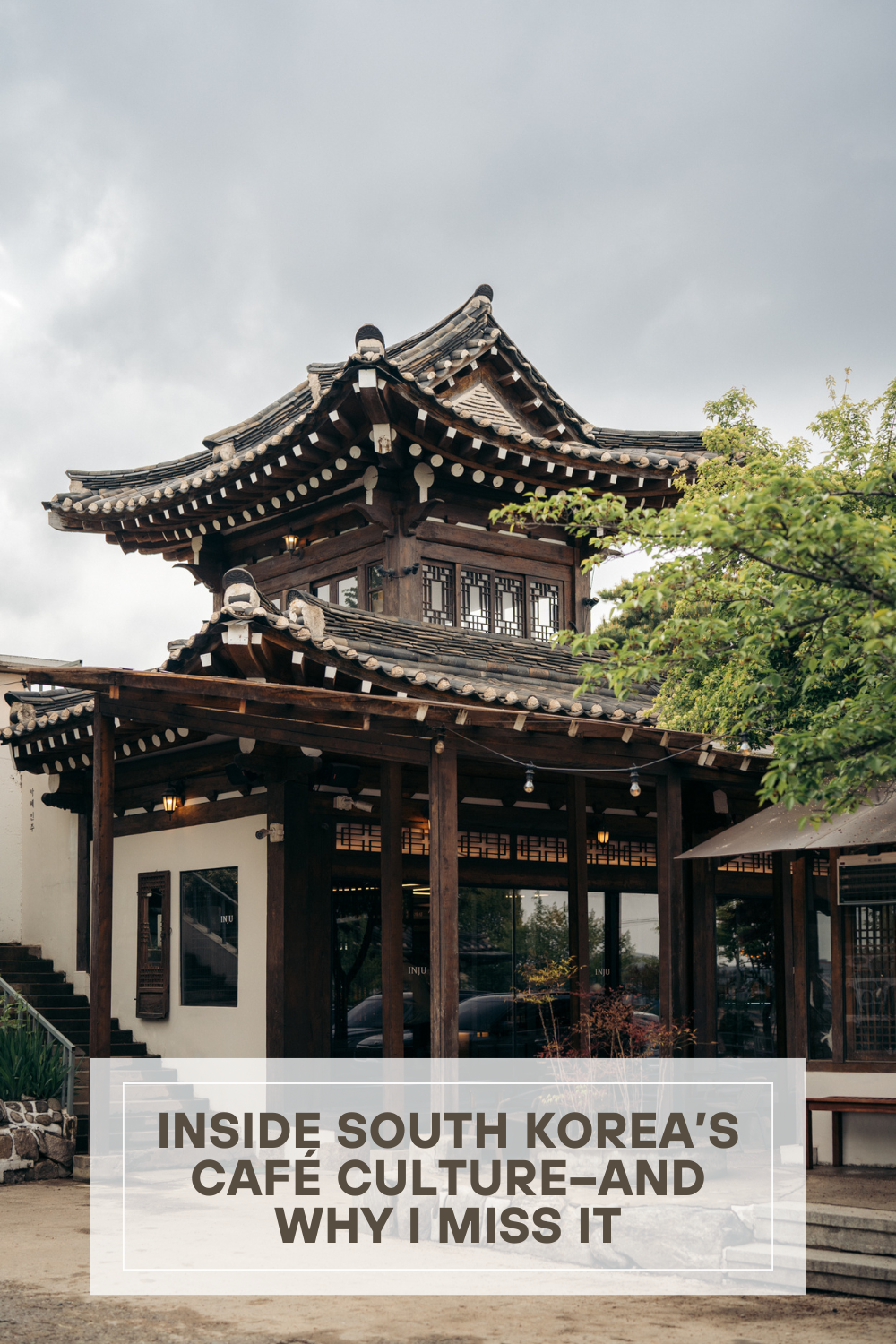
Moving to South Korea in 2022, I went in mostly blind. I had researched a few places I wanted to visit, but otherwise, I left North Carolina excited to let the country reveal itself to me naturally. Now, living in Germany a few years later, one of the things I still yearn for most in South Korea is the café culture. There is nothing like it anywhere else in the world that I have yet to encounter.
Why Cafés Became a “Third Place” in South Korea
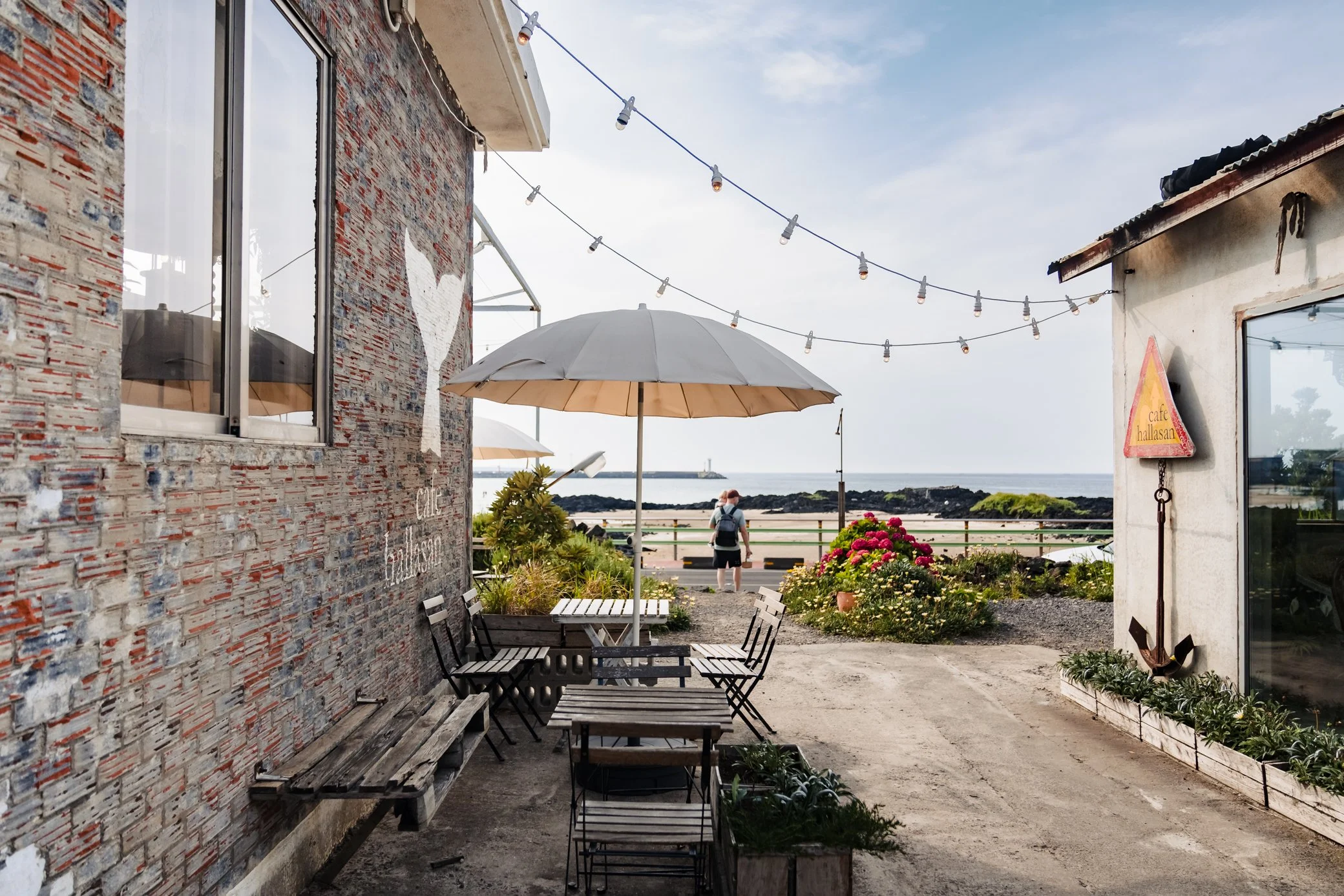
As we settled into life in Pyeongtaek — often considered “the countryside” by Seoulites — I quickly realized that even in quieter, more remote-feeling areas, a unique themed café was never far away. Part of this made sense once I understood daily life there more deeply. Apartments in South Korea are typically small and don’t always lend themselves to hosting guests, so cafés often serve as an informal “third place” where friends, families, and couples gather. Many stay open until midnight, providing students and young professionals a quiet space to study or work outside of cramped dorms and studio apartments. I also noticed that, rather than meeting primarily at bars (at least in Pyeongtaek), people frequently chose cafés as their main social spaces (though some Seoul cafés do blur the line with wine or cocktail menus).
The Rise of Korea’s Themed and Aesthetic Cafés
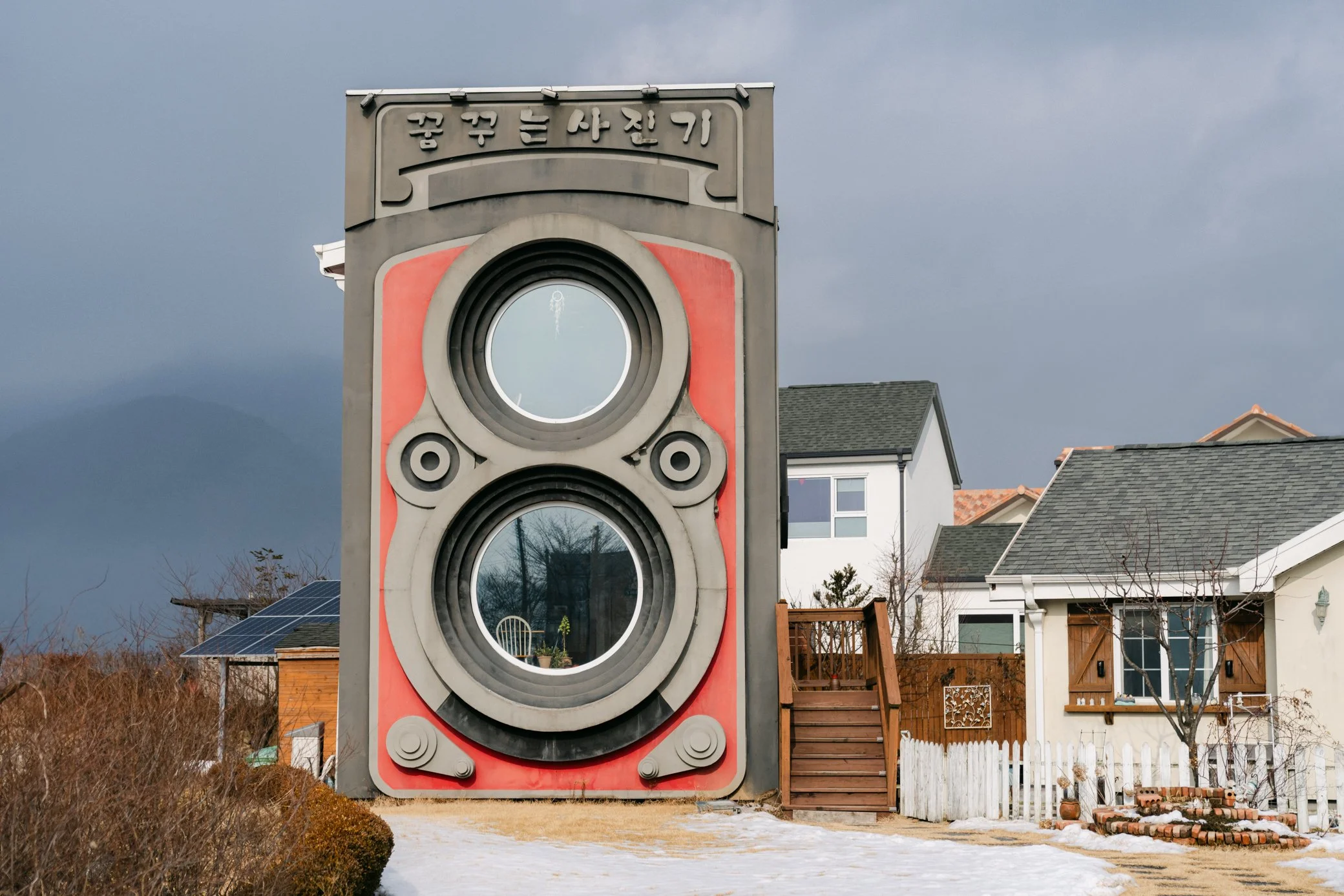
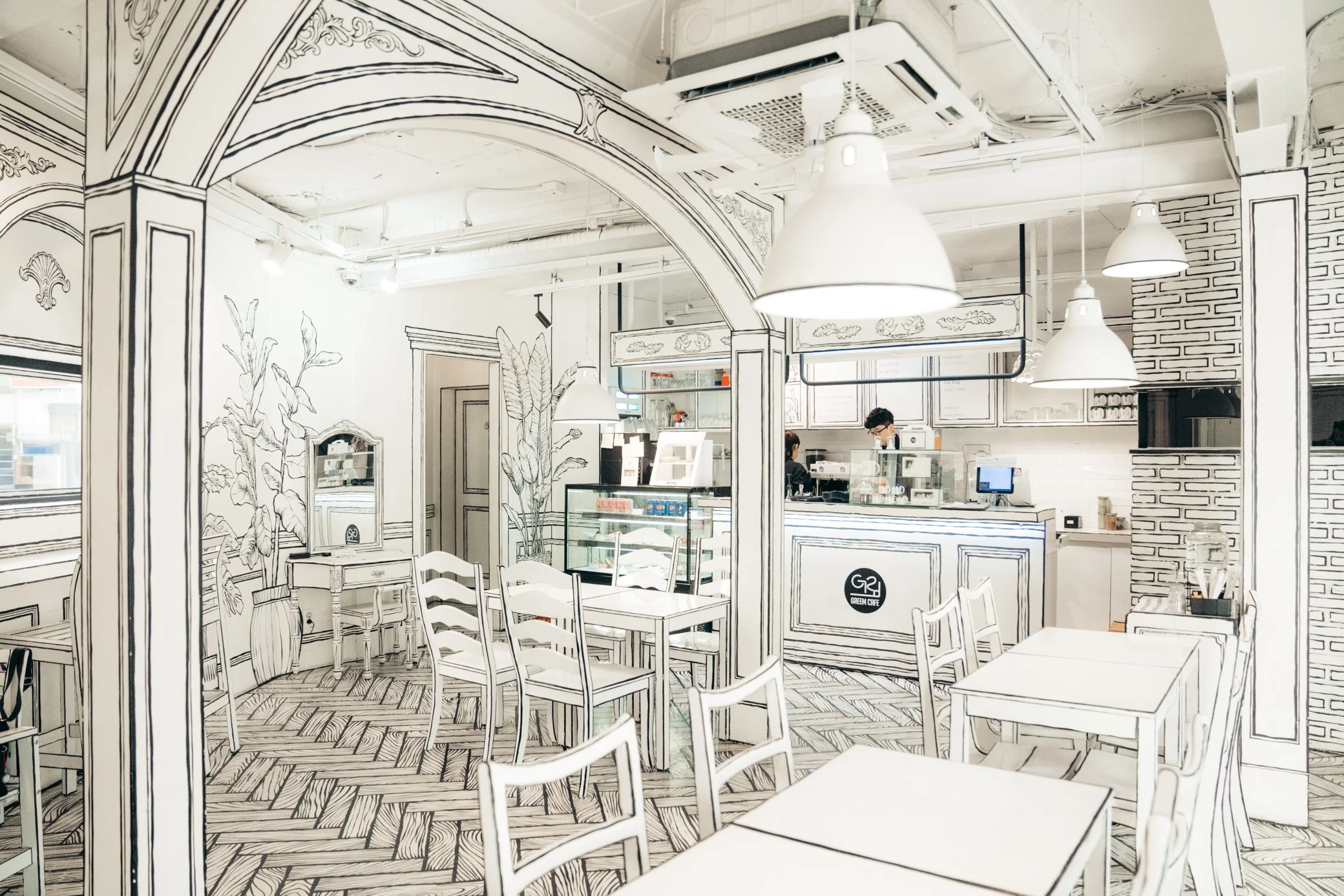
Starbucks opened its first store in South Korea in 1999, and within just a few years, the Americano became one of its most popular drinks — a trend that still held true during my time there from 2022 to 2024 despite a myriad of other offerings on the menu. With the rise of Instagram and TikTok, cafés began competing to create the most “photographable” interiors. Walking down any street from Busan to Jeju, or from Seoul to Pyeongtaek, you pass café after café, all vying for attention. From bird cafés to Western-themed spaces to surreal 2D interiors — and yes, even “poop cafés” . If you can imagine it, South Korea has probably turned it into a café concept.
Is South Korea’s Café Boom Sustainable?
As someone with a business background, I often wondered about the sustainability of such a saturated market. However, the traveler and coffee lover in me happily took advantage of it. According to The Korea Times, as of 2023, there were more than 100,000 cafés in South Korea, with about 84,000 classified as small businesses with four or fewer employees. By early 2025, Starbucks alone accounted for 2,009 locations, making South Korea its third-largest market after the United States and China.
Yet, reporting from The New York Times noted that many small café owners work 12–14-hour days for just above minimum wage, and that 2024 marked the first year since the café boom when more shops closed than opened. It made me wonder: is the café boom truly ending, or simply leveling out?
In January 2026, the Korea Agro-Fisheries and Food Trade Corporation said the import tonnage for coffee beans in 2025 was 215,792 tons (totaling a record 1.86 billion dollars), only down 46 tons from 2025, despite record prices due to inflation and a weaker won. With continuing inflation, will 2026 see the closure of even more beloved cafés?
Why I Still Miss South Korea’s Café Culture
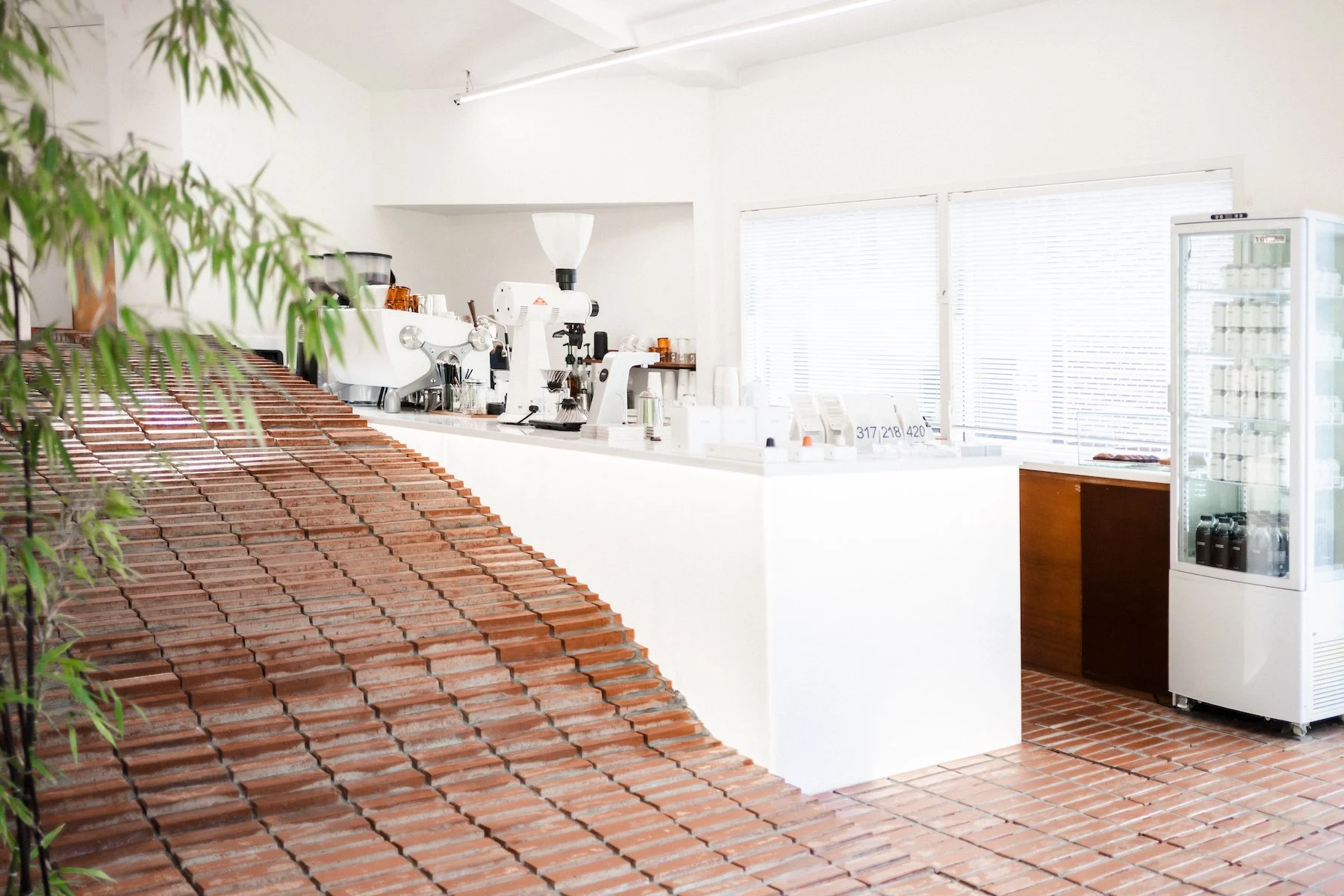
I don’t have an answer to this query. I can’t imagine visiting South Korea without stepping into one of its many cafés. They became a staple of our daily lives, and I always recommend that travelers make time for them when planning their travel itinerary in South Korea. On slow weekends, we would venture out to try a new café, and after two years, we barely scratched the surface. Every road trip eventually led us to a coffee stop, and those small, caffeinated moments are the ones I miss most.
Find this post helpful?
Save it for later!
